6 min read
POS, invoicing tool or management system: what does a clothing store need?
The differences between a POS, an invoicing tool and a management system, so you can pick the right one.
Published on 2026-08-12 · Updated on 2026-08-13
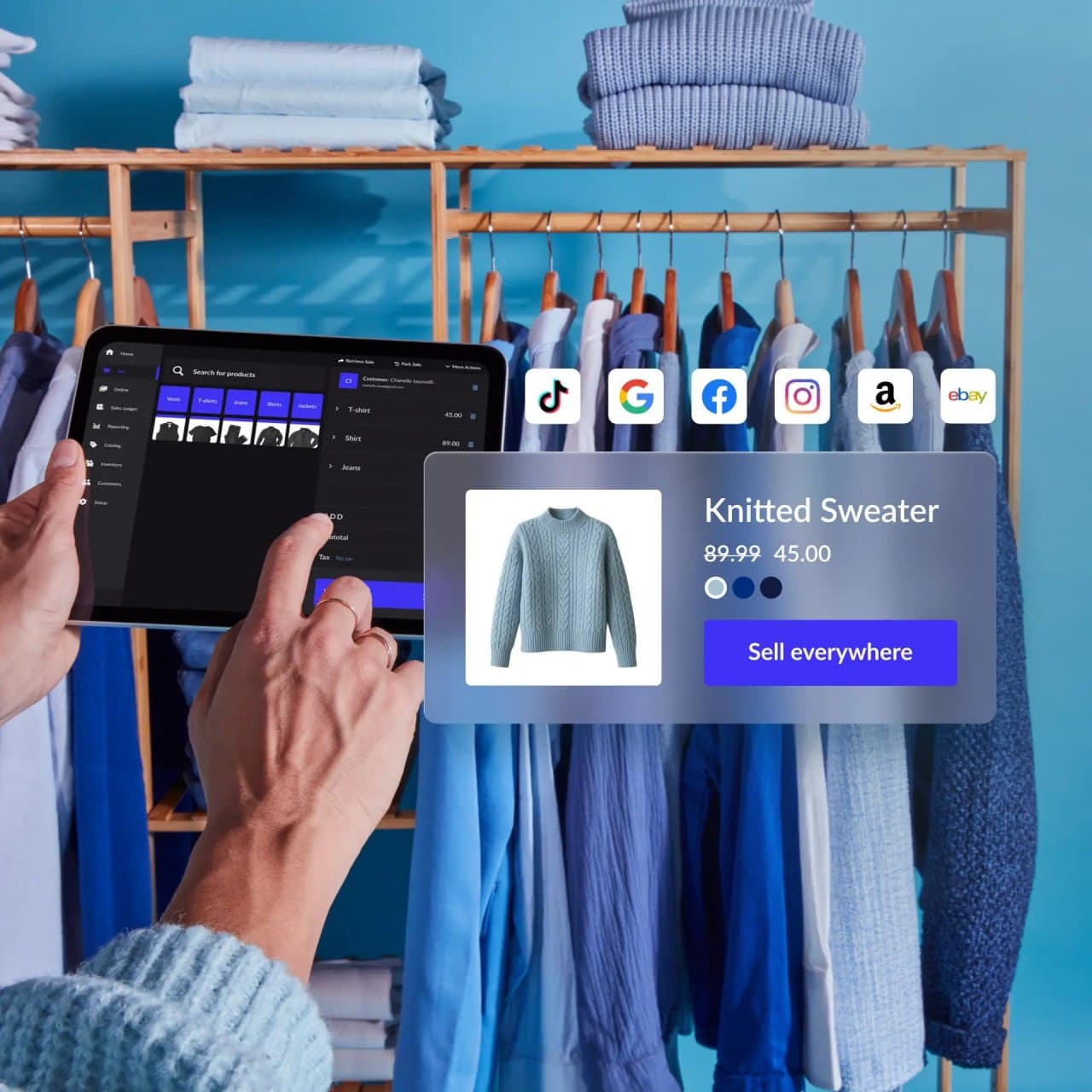
An invoicing tool issues tax documents, a POS organises sales and the register, and a management system connects products, inventory, customers, invoicing and eCommerce. For a clothing store selling both in person and online, the right option is the one that cuts down duplicated data and keeps the operation in one place.
Why invoicing alone isn't enough to run a shop
Issuing an invoice matters, but a clothing store also needs to know what it sold, which variant is left, how much is in the register and which products are available online.
The difference between a POS and a management system is scope: each tool solves a different part of the operation.
What is an invoicing tool?
An invoicing tool is mainly built to issue tax documents. It can be enough for a freelancer or a simple operation, but it usually falls short once there are variants, inventory, a register and multiple channels.
What is a POS system for a clothing store?
POS stands for point of sale. A POS system for a clothing store organises the sale at the counter: products, variants, cart, payment methods, register and stock updates.
The focus is on letting the team sell fast and record every transaction correctly.
What does a management system add?
A management system gives you a wider view of the business. It can centralise products, inventory, sales, invoicing, customers, reports, roles and the online store.
Antonia POS combines point-of-sale operations with management and eCommerce tools so you're not working from duplicated information.
The problem with separate tools
A register plus Excel, a separate invoicing tool, another platform for eCommerce and a stock spreadsheet look like cheap solutions, but they force you to enter and check the same information several times over.
Duplication creates gaps: a sale that doesn't reduce inventory, a product still visible online, or a report that doesn't match the register.
Bringing the shop and the online store together
An integrated solution works from a shared base of information. A sale in the shop updates stock; an online sale also changes availability for the team.
That sync means selling online and in store with fewer manual tasks and less risk of overselling.
What's right for a clothing store?
If you only need to issue tax documents, an invoicing tool may be enough. If you need to bring order to the register and sales, look for a POS. If you also want to control inventory by size and colour, invoicing, customers and eCommerce, a management system for clothing stores is the better fit.
Take a look at Antonia POS, software for apparel retailers that brings these areas together in one place.